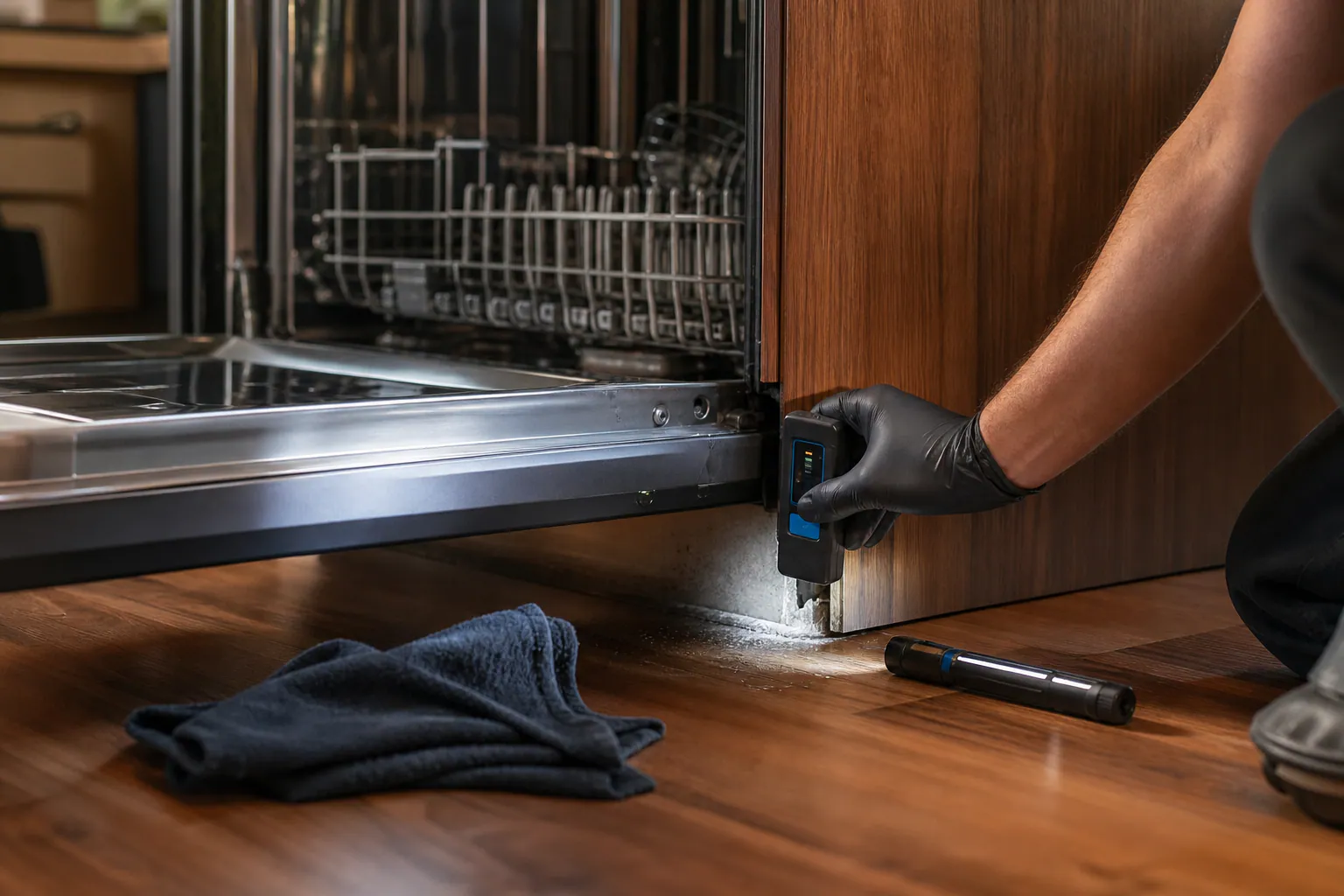
What a Washer Drainage Pattern Can Tell a Technician
The cycle stage, sound and visible water level can provide better context than simply saying the washer stopped.
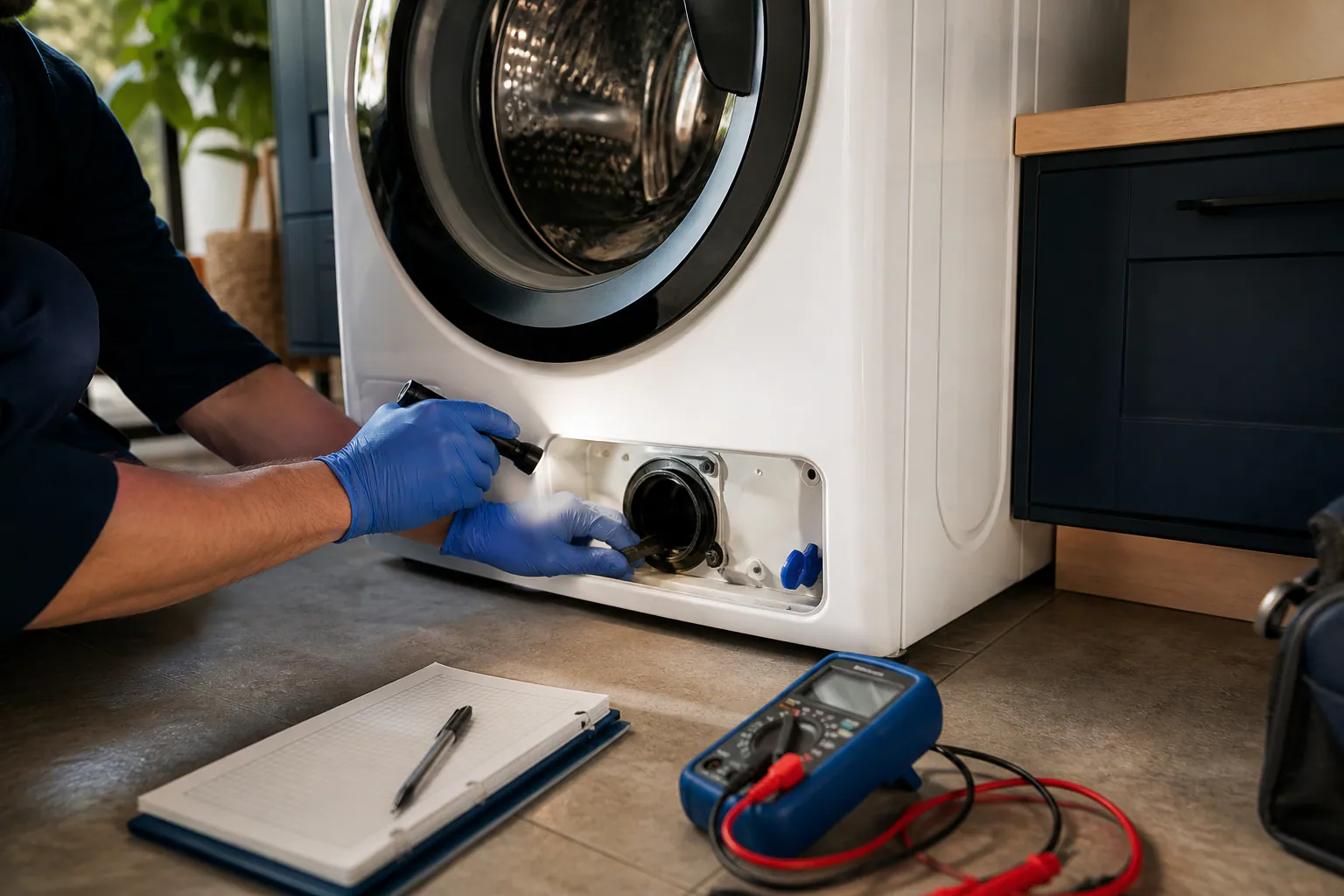
This general advice cannot diagnose your appliance. If there is an immediate safety concern, stop using it and contact the appropriate qualified service.
Describe the point where the cycle changes
The useful detail is often the sequence. Note whether the machine fills, agitates, pauses, drains or attempts to spin before the problem appears. A visible code or repeated sound can be recorded exactly without trying to interpret it.
If water is leaking, overheating is suspected or the machine appears unsafe, stop using it and keep the request focused on what was observed.
Keep the appliance intact
A service request does not require panels to be removed or hoses to be disconnected. Share only the model information and photographs that are safely accessible.
- Loading style and appliance type
- Cycle selected when the issue appeared
- Visible water level and leak location
- Exact error display or indicator pattern
From symptom to approved next step
On site, the technician can compare the reported cycle pattern with the appliance condition and document a finding. That finding creates the repair option; the symptom alone does not.
A clear service record then keeps the assessment, your decision, any fitted part and the final test connected.