A Dishwasher Leak: What to Record Before the Visit
A few safe observations can help explain when and where water appears without attempting a repair from a photograph.
This general advice cannot diagnose your appliance. If there is an immediate safety concern, stop using it and contact the appropriate qualified service.
Start with timing and location
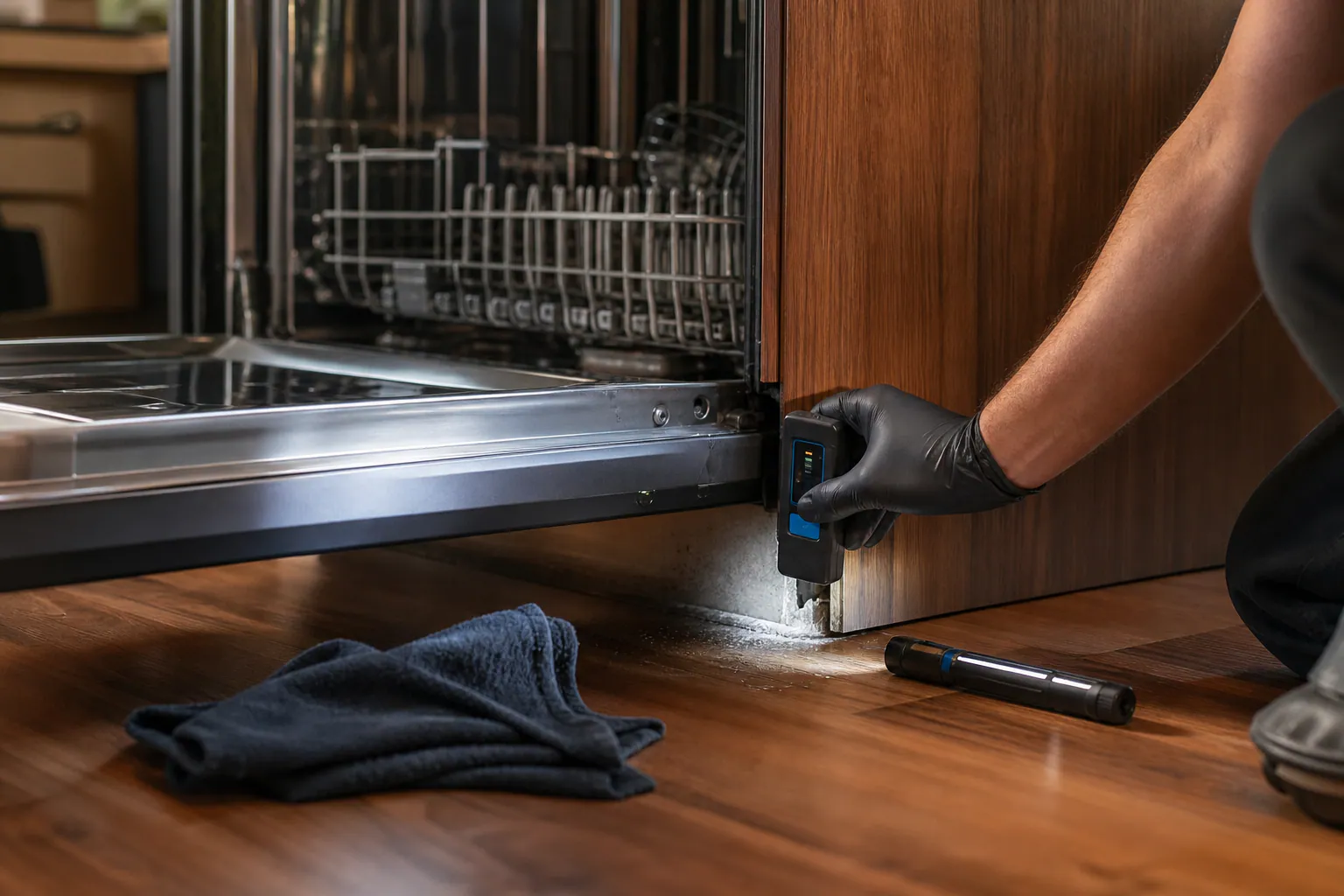
Record whether water appears while filling, during washing, when draining or only after the cycle ends. Note the first visible location without pulling the appliance out or opening service panels.
Photographs can preserve context, but they should not be treated as a complete diagnosis. Reflections, old staining and water travelling from another point can make a single image misleading.
Know when to stop using it
Do not continue running repeated test cycles when water is reaching cabinetry, flooring or an electrical area. A routine request should never replace appropriate emergency or safety guidance.
- Cycle stage when water appears
- Front, side or cabinet-edge location
- Recent detergent or loading changes
- Any error code, unusual sound or smell
Let the visit establish the cause
The technician’s assessment separates what you observed from what is found at the appliance, then explains whether the next step is a repair, a parts return or no further work.
Keeping those decisions visible is more useful than promising a fix before the dishwasher has been assessed.